



General information
The Foundation for Polish-German Cooperation provides funds for projects carried out in cooperation between Polish and German institutions/organisations and participates substantively or organisationally in selected undertakings.
General information
The Foundation for Polish-German Cooperation provides funds for projects carried out in cooperation between Polish and German institutions/organisations and participates substantively or organisationally in selected undertakings.
General information
The Foundation for Polish-German Cooperation provides funds for projects carried out in cooperation between Polish and German institutions/organisations and participates substantively or organisationally in selected undertakings.
When deciding on project support, the FWPN Management Board takes into account general substantive evaluation criteria arising from the statute and mission of FWPN:
· Does the project contribute to improving the quality of Polish-German relations (does it address important, current topics and problems, does it have an impact on the perception of Poland in Germany or Germany in Poland)?
· Does the project reduce deficits in Polish-German relations (does it concern areas / topics / communities not previously connected / not cooperating)?
· Is the subject matter of the project important for Poland and Germany, also in the European context (does it concern important European, national, regional issues)?
Financing principles
The maximum grant amount is PLN 100,000 / EUR 23,500, and the share of the Foundation for Polish-German Cooperation grant may constitute:
· max. 50% of the total project costs above PLN 30,000, which means that the remaining 50% must come from own funds or third-party funds
· max. 80% of the total project costs up to PLN 30,000.
The Foundation reserves the right to grant registered VAT payers grants in net amounts. In the case of grant payments in instalments, the Grant Recipient may receive a maximum of 50% of the granted amount for projects above PLN 30,000 and 80% for projects up to PLN 30,000 before the final settlement. The remaining 50% or 20% of the grant may be transferred to the Grant Recipient upon submission of a correct final project settlement.
Implementation deadlines and additional conditions
Projects should take place in accordance with the schedule provided in the application, but must be completed no later than 31 December of the year for which the grant was awarded, and their implementation should not, as a rule, exceed 12 months. These deadlines do not apply to projects submitted in competitions.
· In the case of international projects, applicants must demonstrate that they have financial resources from third countries participating in the project, unless the FWPN Management Board decides otherwise.
· When deciding on project support, FWPN takes into account whether financing for the entire cost of the undertaking is secured.
· The Foundation does not accept for reconsideration applications on which the Management Board has already made a decision.
· FWPN grants funding with preference for projects that correspond to the designated priorities.
Downloads


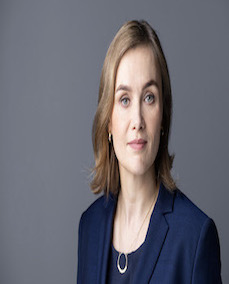
Dominika Kozłowska
Board Member
Biography
President of the Znak Group, editor-in-chief of the monthly magazine “Znak”, PhD in humanities (philosophy), editor, essayist and cultural manager. Associated with Znak since 2006. Board member since 2017 and President of the Board since 2021.
The Znak Group is today the largest and oldest publishing house in Poland, encompassing several publishers, online bookstores including Woblink offering digital books, and the social media platform Lubimyczytać.pl.
She sits on the programme council of the European Solidarity Centre in Gdańsk, among others, and is a member of the Christian-Jewish Association “Przymierze” (Covenant). In previous years she was a member of the Equal Treatment Council established by the Mayor of Kraków, the Congress of Women, and the Józef Tischner Institute of Thought, where she was editor-in-chief of the English-language journal “Thinking in Values”.
Cornelius Ochmann
Director, Board Member
Biography
Managing Director, specialist in European policy, EU–Russia relations, Poland, Ukraine and Belarus. Studied at the universities of Mainz and Wrocław. Held research fellowships in Moscow and Jerusalem (Hebrew University).
Worked at the Bertelsmann Foundation from 1994 to 2013, where he was responsible, among other things, for the International Bertelsmann Forum (IBF) project. Cornelius Ochmann collaborated with the World Bank and European institutions on relations with Eastern European countries.
He has published in Poland in “Nowa Europa Wschodnia” and is a board member of “New Eastern Europe”.
Contact


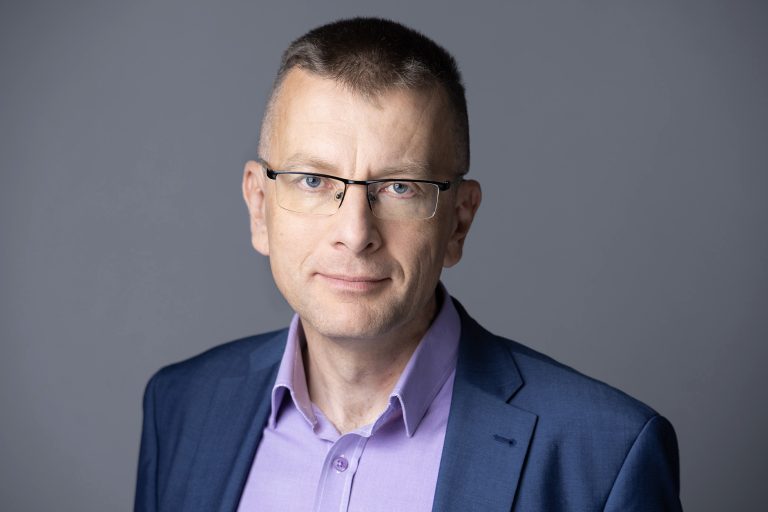
Piotr M. Majewski
Co-Chairman of the Board
Biography
Historian, professor at the University of Warsaw and Chairman of the Academic Council for History at the university. His interests include the history of Central and Eastern Europe, particularly Czech-German relations in the 19th and 20th centuries and the political history of the Czech lands from 1918 to 1948. He has also worked on the foreign policy of the People’s Republic of Poland and forced population migrations after the Second World War.
From 2009 to 2017 he served as Deputy Director of the Museum of the Second World War in Gdańsk, co-authored the programme concept and the permanent exhibition scenario. He is a member of the editorial board of “Przegląd Historyczny” and serves on the academic boards of “Český časopis historický”, “Slovanský přehled” and “Moderní dějiny”, as well as on the academic council of the Polish Diplomatic Documents series.
He has published in “Gazeta Wyborcza”, “Newsweek”, “Polityka”, “Przegląd Polityczny” and “Tygodnik Powszechny”, among others. His major publications include: “Niemcy sudeccy 1848–1948: Historia pewnego nacjonalizmu” (Sudeten Germans 1848–1948: History of a Nationalism, 2007; Czech edition 2014), “Zmarnowana szansa?” (A Missed Opportunity? Possibilities for the Defence of Czechoslovakia in Autumn 1938, 2016; Czech edition 2018), “Kiedy wybuchnie wojna? 1938” (When Will War Break Out? 1938. A Study of the Crisis, 2019; Czech edition 2022; English and Ukrainian editions in preparation), and “Niech sobie nie myślą, że jesteśmy kolaborantami” (Let Them Not Think We Are Collaborators. The Protectorate of Bohemia and Moravia, 1939–1945, 2021; Czech edition in preparation).
Markus Meckel
Co-Chairman of the Foundation Council
Biography
Former Foreign Minister of the GDR, pastor. He serves as Chairman of the Federal Council of the Foundation for Research into the SED Dictatorship, whose establishment he initiated. He is also a member of the board of trustees of the European Network Remembrance and Solidarity. From 12 October 2013 to 22 September 2016 he served as President of the German War Graves Commission. He works on European foreign policy and advocates for the support of democracy.
He studied theology in Naumburg and Berlin. From the 1970s he was involved in political opposition activities in the former GDR. In 1989 he co-founded, with Martin Gutzeit, the Social Democratic Party (SDP) in the GDR. In 1990 he served as acting chairman of the eastern SPD. After the free elections in 1990 he was a member of the GDR People’s Chamber and Foreign Minister of the GDR.
Member of the Bundestag from 1990 to 2009, and Chairman of the German-Polish Parliamentary Group from 1994 to 2009. He served as Deputy Foreign Policy Spokesperson of the SPD parliamentary group. From 1998 to 2006 he was Chairman of the German Delegation to the NATO Parliamentary Assembly, and from 2000 to 2002 Vice-President of the NATO Parliamentary Assembly.
Maciej Górny
Council Member
Biography
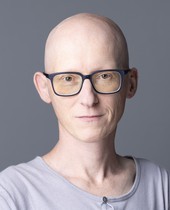
Historian, professor and deputy director for research at the Tadeusz Manteuffel Institute of History of the Polish Academy of Sciences in Warsaw, corresponding member of the Austrian Academy of Sciences. His interests include the history of Central and Eastern Europe in the 19th and 20th centuries and the history of science. He has written about Marxist-Leninist historiographies of the region after 1945, about the involvement of scholars in politics and politics in scholarship, as well as about memory.
From 2006 to 2010 he worked at the Centre for Historical Research of the Polish Academy of Sciences in Berlin. He is a member of the editorial boards of “Střed/Centre. Journal for Interdisciplinary Studies of Central Europe in the 19th and 20th Centuries”, “Zeitschrift für Ostmitteleuropa-Forschung”, “Česko-Slovenská Historická Ročenka” and “Soudobé Dějiny / Czech Journal of Contemporary History”, and a member of the academic council of “Acta Poloniae Historica”.
As a science communicator he appears in radio programmes and publishes in socio-cultural press outlets such as “Frankfurter Allgemeine Zeitung”, “Gazeta Wyborcza” and “Polityka”. He has devoted two books to science communication: “Polska bez cudów. Historia dla dorosłych” (Poland Without Miracles. History for Adults, 2021, awarded the Polityka Prize in 2022) and “Historia głupich idei. Duch narodu w świątyni nauki” (A History of Stupid Ideas. The Spirit of the Nation in the Temple of Science, 2022).
His major publications include “Przede wszystkim ma być naród. Marksistowskie historiografie w Europie Środkowo-Wschodniej” (The Nation Above All. Marxist Historiographies in Central and Eastern Europe, 2007; German edition 2011, English 2013, Czech 2024) and “Wielka Wojna profesorów. Nauki o człowieku (1912–1923)” (The Great War of the Professors. Human Sciences, 1912–1923, 2014; English edition 2019, Russian 2021). Together with Włodzimierz Borodziej he published a history of the “long” First World War in Central and Eastern Europe (“Nasza wojna”, Our War, vols I–II, Warsaw 2014–18 and 2021; German edition 2018, English 2021 and 2023). Most recently he published “Drawing Fatherlands: Geographers and Borders in Inter-War Europe” (2022).
Current scholarships and competitions
Below we present current calls for scholarships and competitions organised by the Foundation for Polish-German Cooperation.
Current scholarships and competitions
Below we present current calls for scholarships and competitions organised by the Foundation for Polish-German Cooperation.
There are currently no scholarship or competition calls organised by the Foundation for Polish-German Cooperation.
How to obtain a grant?
Below we present instructions for submitting a grant application. The application should be completed and submitted using the Online Application Processing System (ISOW).
Submit application via ISOWHow to obtain a grant?
Below we present instructions for submitting a grant application. The application should be completed and submitted using the Online Application Processing System (ISOW).
Submit application via ISOWSubmitting an application via ISOW

Help with submitting an application
In case of technical problems related to the malfunctioning of ISOW, please send a report to the email address indicated below, containing:
– the applicant's name;
– first name, surname, phone number and email address of the contact person;
– a brief description of the problem.
Downloads
What we support?
As the Foundation for Polish-German Cooperation (FWPN), we provide financial support for projects carried out in cooperation between Polish and German institutions or organisations and participate substantively or organisationally in selected undertakings.
What we support?
As the Foundation for Polish-German Cooperation (FWPN), we provide financial support for projects carried out in cooperation between Polish and German institutions or organisations and participate substantively or organisationally in selected undertakings.
Project assessment criteria and priority areas
The Foundation for Polish-German Cooperation supports projects that serve the development of Polish-German relations and contribute to deepening mutual understanding between the citizens of both countries.
When assessing applications, we consider: the substantive quality of the project, its innovativeness, the scope of its impact, and the sustainability of its results. We particularly value projects engaging the younger generation and using modern forms of communication.
Projects should fall within one of the Foundation’s five priority areas, which reflect the most important dimensions of Polish-German cooperation.
We encourage you to familiarise yourself with the priority areas and to align your project with one of them.